Why Nobody Cares About Class 3 Scooter


Choosing a Class 3 Scooter
Class 3 scooters are bigger and have an maximum speed of eight mph. They feature features like indicators, lights and a horn. They require registration to use on roads. They come with wider bases, seats that are adjustable and greater weight capacities.
Before buying a class 3 scooter, take into consideration the terrain you'll be traveling over and the distances you'll cover. You should also think about your budget.
These are made to be used outdoors.
A reliable mobility scooter is a great investment for those who spend much of their time outside. It can assist you to navigate around your neighborhood and run every day errands, such as grocery shopping and attending events. There are a few aspects to take into consideration when selecting the best model for you. This includes the type of road surface on which you'll be driving, your intended distances, and ongoing expenses.
There are two major types of mobility scooters two types: Class 2 and Class 3. Both provide independence and comfort however each comes with distinct features and legal requirements. It's crucial to know the differences between these two scooters in order to ensure that you're operating your scooter properly and complying with applicable laws.
Class 2 scooters can go up to 4mph, and are designed for pavement use. They are small and lightweight making it easy to maneuver them in tight spaces. They may also feature basic controls for driving, and smaller batteries.
On the other hand On the other hand, Class 3 scooters are designed for both pavement and road use. These are larger and heavier than Class 2 models, however, they can be moved around in tight spaces. They have a greater ground clearance, as well as a larger battery capacity, which allows for longer journeys. They are also equipped for road use with indicators, lights, a horn, etc.
It is easy to determine the class of your scooter, however you should also consider the terrain you will be riding on. In general the case of a Class 2 scooter, it is suitable for most roads with pavements, whereas a Class 3 scooter is more for more rugged and unpaved roads.
You should also consider how much you're willing to pay for a mobility scooter. This includes its maintenance and other costs. www.mymobilityscooters.uk will likely cost more than a class 2 model because of the extra features. Additionally, you'll need to take into account the cost of insurance and possibly road tax. This can quickly add up especially if you intend on using the scooter for long periods of time.
You will feel at ease
A class 3 scooter is a fantastic option to travel long distances without difficulty. These scooters are great for transporting medical equipment and other things during your journey. The scooters are dual-speed (4 mph on footways and 8 mph on roads), so you can adapt it to the environment. Safety features include rearview mirrors and warning lights for hazard areas.
Choosing the right mobility scooter is based on a variety of factors, such as the type of terrain you typically travel on and your lifestyle. Do you prefer to move around your home, shopping centers and other indoor spaces or do outdoor activities take you further? Also, what is the longest distance you usually travel on a day? This will help you decide which class 2 or class 3 scooter is more suitable for your requirements.
A Class 2 scooter would be perfect if you need to travel around or do lots of shopping indoors. They are compact, light and easily dismantled and reassembled to fit into small vehicles, or placed into the back of your own car. They are easy to transport and require only a small battery. This makes them ideal for those with small storage space or a smaller home, since they can be removed from the batteries to recharge them.
Class 3 scooters, on contrary, are designed to be driven on roads, so you need an insurance policy and a driving licence to operate them. They are much faster than their class 2 counterparts and have many additional features to ensure their safety on the road. For instance, they have better suspension systems and larger wheels to allow them to go over bumps and inclines.
A Class 3 scooter would be the best option for you if planning to travel for long distances or visit friends. They are designed to be used on both roads and pavements. They also have the highest speed of 8 mph which is the legal limit for a mobility scooter in the UK. They are also more comfortable and spacious, with adjustable seats and a variety of accessories that can be tailored to your needs.
Simple to use
Mobility scooters give you the freedom to travel on your own and quickly. However, it's essential to consider your needs and the terrain you will be travelling through when selecting the best model for you. Consider factors like weight capacity, battery range and terrain compatibility when making your selection. Research thoroughly to ensure that the mobility scooter you select meets your needs and improves your overall quality of life.
Class 2 and class 3 scooters are both easy to operate, but there are some important distinctions between the two types. The class 2 mobility scooter is made for footpath and pavement use with a maximum speed of four miles per hour and is not allowed on roads. Class 3 scooters can be used both on pavements and on roads. They also have road-legal features such as lights and indicators. They come with a higher maximum speed and a larger battery capacity, making them perfect for long-distance outdoor trips.
Both models are simple to maneuver and have smooth and sharp turning at tight corners. They also have advanced steering systems that offer an enjoyable ride for those with limited physical functionality. In addition, they are equipped with a wide range of customization options to create a unique user experience and safety.
Certain class 3 scooters are made for different types of terrain such as slopes and uneven surfaces. They also have premium suspension systems and pneumatic tires that are able to withstand rough conditions. They also have a bigger deck to give you more space to sit and can accommodate accessories like bags and baskets.
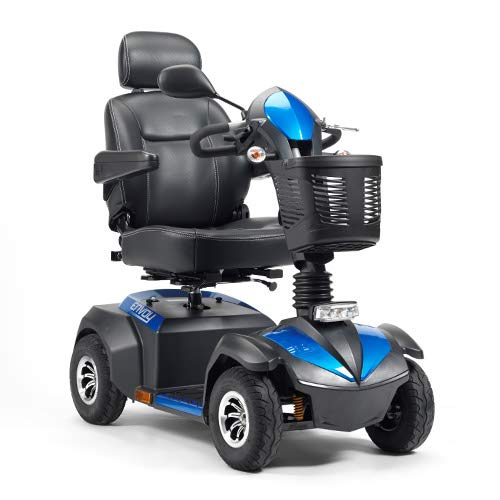
For safe operation It is essential to ensure that the scooter's speed limit is in line with local laws. Class 3 scooters must be registered with the DVLA to be operated on public roads. Check your local laws for more information. In general, you'll need provide a valid driving license and insurance.
The most important characteristic of a class 3 mobility scooter is its capability to navigate rough terrain. The big suspension systems and wheels of mobility scooters in class 3 allow them to effortlessly roll over obstacles like hills, inclines, and other obstacles. They are particularly beneficial for rural areas, where it may be difficult to find a path that is suitable for cars, or other types of motorized transportation.
It is secure
Class 3 scooters are road-legal and come with a the highest speed of 8 mph. They also have features like lights, indicators and a horn to aid in identifying you in dim light conditions. They can support up to 400 pounds of weight, which makes them suitable for people of all size. They need to be registered for use on the roads and are not suitable indoors.
A Class 3 scooter is a great option if you intend to travel for long distances. They offer a greater range than Class 2 scooters and are made to handle rough terrain like humps and inclines. They also come with a more solid design and larger wheels, which makes them more comfortable for longer journeys. Be aware that climbing uphill may require more battery power. It could also be slower than driving on flat ground.
Always drive your scooter at a slower speed in areas with pedestrians or on the pavement. This is particularly important when you are in crowds or busy areas like shopping centers or supermarkets. You should also give preference to pedestrians with disabilities, particularly those who are visually or audibly impaired. You should also avoid using mobile phones or headphones while driving a motor scooter, as they can distract you and keep you from being focused. Wearing reflective clothing can improve your visibility.
The high ground clearance is a further important safety feature for class 3 scooters. This lets you drive over kerbs, as well as other obstacles, without damaging your vehicle. Always drive with caution when crossing the road or driveways, and be extra careful in adverse weather conditions. To avoid accidents, it's recommended to cross with someone else or use a pedestrian crossing.
In general you should not go over 4 mph on a pavement or in pedestrian areas and you should make use of dropped kerbs where possible. Additionally, you should not use your scooter to cross bridges or the dual carriageway if it has an upper limit of 50 mph. Consult the instruction manual of your scooter if you're not sure what speed limits are applicable to it.